Heads up: we may earn a commission if you book through our Sandals links, at no extra cost to you.
Quick Answer
| Question | Answer |
|---|---|
| Why is it called a honeymoon? | The word comes from two parts: "honey" (referring to mead, a honey wine) and "moon" (a lunar month). Newlyweds in medieval and Norse cultures drank mead for 30 days after their wedding to boost fertility and ensure a sweet start to marriage. |
| When was the term first used? | The earliest known written use dates to 1552, in Richard Huloet's Abecedarium Anglico Latinum. |
| Did Vikings really start the tradition? | The Norse "hjunottsmanathr" (honey month) is one of the strongest origin theories, though historians debate the exact roots. |
Why Is It Called a Honeymoon? The Full Story
Free: Sandals Resort Comparison Cheat Sheet
All 17 resorts compared side-by-side — budget tiers, overwater options, what's included, and booking tips. Print it. Share it. Plan your honeymoon with it.
If you've ever paused mid-booking and wondered, "Wait — why is it called a honeymoon?" — you're not alone. It's one of those words everyone uses but almost nobody can explain. The answer turns out to be far more interesting than you'd expect, involving Viking warriors, medieval marriage customs, fermented honey wine, and a surprisingly poetic view of how love changes over time.
Let's trace the word back to its roots.
The Two Parts of the Word: Honey + Moon
The word "honeymoon" breaks into two halves, and each one carries meaning:
Honey doesn't just refer to sweetness. It points directly to mead — an alcoholic drink made from fermented honey and water. Mead is one of the oldest alcoholic beverages in human history, with archaeological evidence tracing it back to 7000 BCE in regions of China and Ethiopia. In medieval and Norse Europe, mead was the drink of celebration, ritual, and romance.
Moon refers to a lunar month — roughly 30 days. This was the traditional period newlyweds were expected to spend together (and drink mead together) after their wedding ceremony.
Put them together: honey (mead) + moon (one month) = honeymoon. Newlyweds drank mead for a full lunar cycle after their wedding.
The Norse Origin: Hjunottsmanathr (Honey Month)
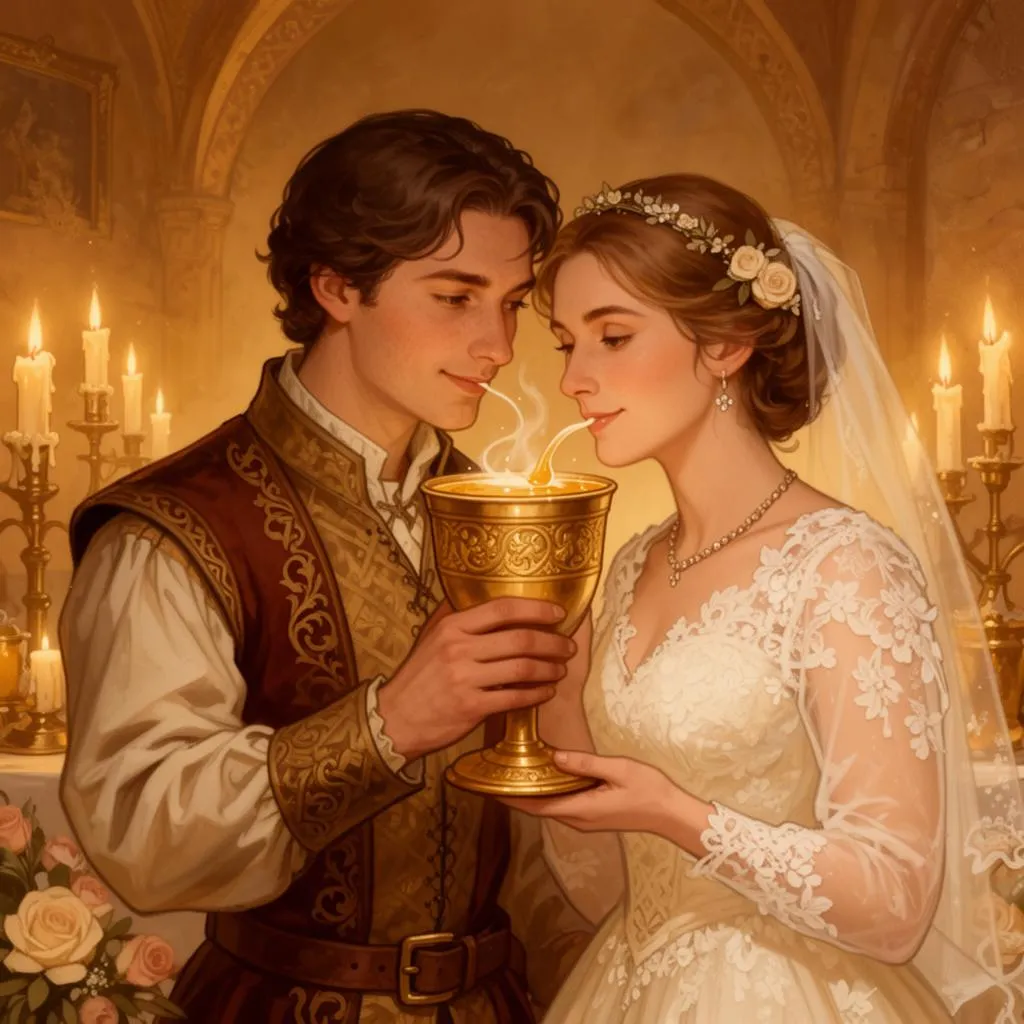
The most widely cited origin theory traces the word to Old Norse culture. The Norse term hjunottsmanathr translates literally to "honey month" — a designated period after the wedding ceremony when the couple would retreat from daily life and begin their new partnership.
Here's what that looked like in practice:
- The family provided mead. The bride's and groom's families were responsible for gifting the couple enough mead to last a full lunar month (approximately 30 days).
- Mead was believed to boost fertility. The Norse considered mead an aphrodisiac. Drinking it for a full month was thought to increase the likelihood of conceiving a child — ideally a son — within the first year of marriage.
- It was a period of bonding. Beyond the mead itself, the honey month served as dedicated time for the couple to strengthen their bond away from the demands of the community.
The tradition was deeply embedded in Norse wedding culture. During the ceremony itself, the bride and groom shared mead from a loving cup in a ritual known as the "bride-ale" — which, incidentally, is where the English word "bridal" comes from.
The Medieval English Interpretation
By the 1500s, the term had evolved. The earliest known written use of "honeymoon" in English appears in 1552, when scholar Richard Huloet wrote in his Abecedarium Anglico Latinum:
"Hony mone, a term proverbially applied to such as be newly married, which will not fall out at the first, but th'one loveth the other at the beginning exceedingly."
Notice the subtle edge in that definition. Huloet wasn't just describing sweetness — he was noting that the initial intensity of love was expected to fade, much like a phase of the moon. The "moon" in honeymoon may carry a bittersweet double meaning: the love burns bright at first, then slowly wanes.
This interpretation adds a layer of realism to the romance. The honeymoon period isn't just a vacation — it's the peak of sweetness before the ordinary rhythms of married life begin.
The Mead Connection: How Honey Wine Shaped the Tradition
Mead deserves its own section because it's so central to the honeymoon story.
What is mead? Mead is a fermented beverage made from honey, water, and sometimes spices, fruits, or grains. It predates both wine and beer and was consumed widely across ancient civilizations from Greece to Scandinavia to Ethiopia.
Why mead at weddings? Mead was associated with:
- Fertility — Honey was considered a symbol of virility and reproductive power.
- Celebration — It was the premium drink for important occasions.
- Good fortune — Sharing mead was believed to bless the union with prosperity and happiness.
The 30-day supply tradition: In Norse and medieval European customs, the wedding families provided enough mead for the newlyweds to drink every day for a full lunar month. This wasn't just generosity — it was a structured ritual designed to give the marriage the best possible start.
Some modern meaderies have revived this tradition. You can actually buy "honeymoon mead" kits today — a nod to the historical roots of the word.
How the Honeymoon Evolved Over the Centuries
The concept of taking a trip after your wedding didn't become widespread until much later:
| Era | Honeymoon Practice |
|---|---|
| Norse/Medieval (500–1500 AD) | Drinking mead for a month at home or in the couple's community. No travel involved. |
| British Upper Class (1800s) | "Bridal tours" emerged — wealthy couples visited relatives who couldn't attend the wedding. |
| Victorian Era (mid-1800s) | The trip became about the couple rather than visiting family. Seaside resorts and European destinations grew popular. |
| Post-WWII America (1940s–60s) | The modern honeymoon as a romantic couples-only vacation became mainstream. Niagara Falls became an iconic honeymoon destination. |
| Modern Era (2000s–present) | Honeymoons are now global, experience-driven trips. The average couple spends $5,300 and travels for 7 days. |
Today, 69% of newlyweds take a honeymoon, and the Caribbean remains one of the most popular destinations for American couples. The tradition has come a long way from sharing mead by firelight — but the core idea remains: dedicated time for two people to begin their life together.
7 Fascinating Honeymoon Facts You Probably Didn't Know
- The word "bridal" also comes from mead. "Bride-ale" was the Norse wedding feast where mead was served — and "bridal" evolved from that term.
- Ancient Babylonians practiced it too. The bride's father supplied the groom with honey beer for a full month. The calendar was lunar-based, so the period was called the "honey month."
- Niagara Falls became a honeymoon hotspot by accident. Napoleon's brother visited in the early 1800s and wrote about it, sparking a craze among wealthy couples. By the 1900s, it was the default American honeymoon destination.
- The average honeymoon today costs $5,300. According to The Knot's 2024 study, couples allocate roughly 26% of their total wedding budget to the honeymoon — more than double the traditionally recommended 10%.
- "Mini-moons" are growing fast. About 28% of couples now take a short 2–5 day trip right after the wedding, with a longer honeymoon planned for later.
- Hawaii is the #1 honeymoon destination for 2026. Italy ranks second, and Japan has climbed to its highest-ever ranking at #3.
- 59% of honeymooners now travel internationally. This is up from just 41% in 2021, reflecting the post-pandemic rebound in global travel.
What Does This Mean for Your Honeymoon Planning?
Understanding the history is fun — but it also puts your own honeymoon in perspective. The tradition has always been about the same thing: carving out protected time as a couple to celebrate your new beginning.
Whether your version of that is:
- A week at an all-inclusive Caribbean resort where everything is taken care of
- An adventurous trip across tropical destinations from Bali to the Maldives
- A budget-friendly escape that proves romance doesn't require a massive spend
- A road trip through the best honeymoon destinations in the USA
...the spirit is the same one those Norse newlyweds had over a thousand years ago: slow down, be together, and start your marriage right.
Not sure where to start? Our Resort Match Quiz can help you narrow down the perfect honeymoon style in under 2 minutes.
Ready to Book Your Caribbean Honeymoon?
If the Caribbean is calling, Sandals Resorts offers the ultimate all-inclusive honeymoon experience — luxury suites, private beaches, gourmet dining, and everything included in one price.
Frequently Asked Questions
Why is it called a honeymoon?+
The word combines "honey" (referring to mead, a fermented honey wine) and "moon" (a lunar month of about 30 days). In Norse and medieval traditions, newlyweds drank mead for a full month after their wedding to promote fertility, good fortune, and a sweet start to married life.
Where does the word honeymoon come from?+
The most widely accepted origin traces to the Old Norse term "hjunottsmanathr," meaning "honey month." The English spelling "hony mone" first appeared in writing in 1552 by scholar Richard Huloet.
Did Vikings really drink mead for a month after their wedding?+
Yes — this is well-documented in Norse historical records. The families of the bride and groom provided enough mead to last a lunar cycle (about 30 days). The tradition was believed to boost fertility and bless the marriage.
What is mead?+
Mead is one of the world's oldest alcoholic beverages, made by fermenting honey with water. It predates both wine and beer, with evidence of mead production dating back to 7000 BCE. It ranges from dry to sweet and can include fruits, spices, or grains.
When did honeymoons become travel vacations?+
The concept of traveling for a honeymoon began with British "bridal tours" in the early 1800s, where couples visited relatives. By the Victorian era, the trip shifted to being about the couple themselves. The modern romantic honeymoon vacation became mainstream in post-WWII America.
How long is the average honeymoon today?+
According to The Knot's 2024 study, the average honeymoon lasts about 7 days. 56% of couples take a 5–7 day trip, while 28% extend to 1–2 weeks. A growing number of couples also take "mini-moons" of 2–5 days.
How much does the average honeymoon cost?+
The average American honeymoon costs approximately $5,300, according to 2024 data. Couples allocate about 26% of their total wedding budget to the honeymoon, with accommodations taking the biggest share at 35–50% of the trip cost.
What is the most popular honeymoon destination?+
For 2026, Hawaii tops the list as the #1 honeymoon destination, followed by Italy and Japan. The Caribbean and Mexico remain the most popular international regions for American honeymooners, with all-inclusive resorts being a top choice.
Found your resort? See it on Sandals.com.
Check room categories and availability for your dates directly with Sandals.
Explore Sandals Honeymoons